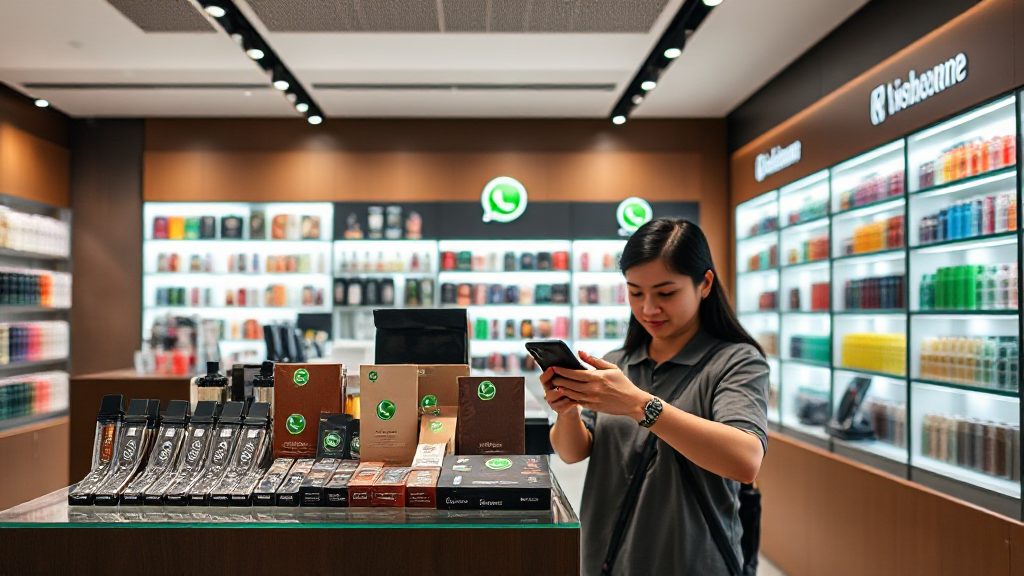
How Lana Vape Delivery Became a Singapore Retail Fixture: The Backstory
Not long ago, buying a vape in Singapore meant planning your whole day around it. You had to know which shop carried what, travel across the island, hope the stock was real, and hope nobody asked too many questions along the way. Today, a vaper can send a short message, confirm a flavor, and have a sealed package at the door before dinner. That shift did not happen overnight, and it did not happen by accident. It was built by a handful of online retailers who treated delivery, discretion, and stock reliability as the product itself. For anyone weighing up where to buy, understanding how that system came together is genuinely useful context. If you want to see the finished version of that evolution in action, you can start with a quick vape contact and watch how fast the whole process moves.
The pre-delivery era: when buying a vape was a weekend errand
Go back a decade and the Singapore vape scene looked nothing like it does now. Physical retail was the default, but it was scattered, inconsistent, and often inconvenient. A vaper who liked a particular pod system had to remember which neighbourhood shop stocked it, and even then, the answer changed week to week. Flavors rotated without warning. Devices that were popular online were nowhere to be found locally. People learned to buy in bulk when they could, hoarding coils and pods the way you might stock up before a long trip.
There was also a social layer to it. Recommendations travelled by word of mouth, through group chats and friends of friends. Nobody had a reliable way to check whether a shop was legitimate, whether a device was authentic, or whether the price was fair. The whole experience rewarded patience and punished anyone who needed something quickly. For a working adult in Singapore, that friction was the single biggest complaint: not price, not selection, but time.
That gap is exactly what the first wave of online sellers noticed. They were not trying to reinvent vaping. They were trying to remove the errand. The pitch was simple: tell us what you want, and we will bring it to you.
The rise of same-day delivery as the real product
Same-day delivery sounds like a logistics feature. In practice, it became the defining feature of Singapore’s online vape retail. The reason is geography. Singapore is small enough that a well-organised operation can move stock from a central point to almost any address within a few hours. What used to be a structural disadvantage for local retailers — a tiny market — turned into an advantage for anyone who could deliver quickly.
The retailers who succeeded were the ones who understood that customers were not just buying a device. They were buying certainty. Certainty that the item was in stock, that it would arrive today, and that the packaging would not announce itself to the whole block. Discreet packaging stopped being a nice extra and became table stakes. So did instant messaging support, because waiting on an email reply defeats the purpose of same-day delivery. When people talk about vape delivery singapore as a category, this is what they actually mean: speed, discretion, and a human on the other end of the chat.
By the mid-2020s, the pattern was set. Customers expected to message a shop, get a reply within minutes, confirm an order, and receive it the same day. Any retailer that could not do all three simply dropped out of consideration. The bar had moved, and it never moved back.
Why Lana became the running example
Every retail category has a product line that ends up symbolising the whole market, and in Singapore’s disposable vape segment, Lana became that line. The reasons are practical rather than glamorous. Lana devices arrived in a range of puff counts that mapped neatly onto different customer habits: a compact option for casual users, a mid-range option for regulars, and a high-capacity option for people who did not want to think about replacements often. That spread made the brand easy to recommend, because there was almost always a version that fit the person asking.
The Lana Pix 20000 Puffs, for instance, appealed to heavy users who wanted fewer reorders. The Lana Trend 6000 Puffs suited people who preferred something lighter and more portable. The Lana Cheer 15000 Puffs sat in the middle and became a common default. None of this was revolutionary on its own, but together the range gave retailers a coherent story to tell. A customer could walk in — or message in — with no idea what they wanted and still leave with something appropriate.
That coherence is what turned Lana from a product into a reference point. When a shop says it carries the full line, customers immediately understand what kind of shop it is. You can see that effect at work in any well-run lana vape shop, where the Lana range anchors the rest of the catalogue rather than sitting off to one side.
From WhatsApp messages to a delivery culture
The WhatsApp era changed customer expectations more than any single product did. Before instant messaging, an online order meant a form, a confirmation email, and a wait. After instant messaging, it meant a conversation. Customers could ask about flavor availability, get a photo of the actual stock, and confirm an address in the same thread. Retailers could answer questions before they became complaints.
This sounds like a small change. It was not. It moved the centre of the transaction from the website to the chat, and it rewarded shops that kept someone available during normal waking hours. It also created a new kind of trust: customers began to recognise the person behind the account. In a market where authenticity matters and grey-market products are a real concern, that personal thread became a form of verification. A shop that answers quickly and answers clearly is, in practice, signalling that it has nothing to hide.
The same dynamic applies to delivery itself. Once a customer has experienced a properly sealed, plainly packaged parcel arriving on time, they stop shopping around. Loyalty in this segment is built on reliability, not marketing. That is why lana singapore delivery is discussed less as a service and more as an expectation — the baseline that any serious seller has to meet.
Authenticity, stock, and the trust problem
The uncomfortable truth about online vape retail is that it attracts copycats. Counterfeit devices and refilled pods are a persistent issue, and customers know it. That awareness shaped the market in a specific way: sellers had to prove authenticity constantly, not once. Ready stock became part of that proof. A shop that shows real inventory and ships immediately is harder to fake than a shop that takes orders and disappears.
This is where the mature Singapore retailers separated themselves from the fly-by-night operators. They invested in holding stock rather than dropshipping, because holding stock meant they could answer questions honestly and deliver on the same day. They standardised packaging so that every parcel looked the same, which protected customer privacy and made tampering obvious. They kept support channels open so that a problem could be raised and resolved in minutes rather than days.
The result is a market where the brand name on the device matters less than the retailer behind it. A customer might come for a specific Lana model, but they stay because the shop proved it could be trusted with the transaction. That is a subtle but important distinction, and it explains why so many buyers now describe their purchasing habit in terms of the seller rather than the product. When people search for lana vape singapore, they are often really searching for a seller they can rely on.
What a mature vape retail market actually looks like
By 2026, the Singapore online vape market has settled into a recognisable shape. Same-day delivery is standard among serious sellers. Discreet packaging is assumed. Instant support is expected. Product ranges are curated rather than chaotic, with a few well-known lines doing most of the work and a rotating selection of flavors filling in the edges. Customers are more informed than they were five years ago, and they ask sharper questions about authenticity, capacity, and delivery windows.
The retailers who thrive in this environment tend to share a few traits. They keep stock visible and honest. They respond quickly. They package carefully. They do not overpromise on timing. And they treat the delivery experience as part of the product, not an afterthought. In a small market, reputation travels fast in both directions, and a single missed delivery can undo months of good work.
For a curious buyer, the practical takeaway is straightforward. The backstory of Singapore vape delivery explains why the current standard exists, and it gives you a checklist for judging any seller you consider. Fast response, real stock, discreet packaging, same-day arrival — if a shop delivers on all four, the rest usually follows. If it stumbles on any of them, the history of this market suggests you should keep looking. The evolution from weekend errands to same-day parcels was driven by customers who refused to accept less, and that pressure is still shaping how singapore lana vape retail works today.
What began as a workaround for inconvenient shopping has become the default way an entire market operates. The shops that understood this early — and built their operations around speed, discretion, and trust — are the ones still standing. The rest is history, and it is still being written with every same-day delivery.